



If someone walked up to a crowd in first-century Jerusalem and shouted “Jesus!”, nobody would have turned around. Not because they were being rude, but because that name simply didn’t exist yet. The man at the centre of the world’s largest religion was called Yeshua, and the name most people use today took centuries of linguistic evolution to arrive at.
How the Name Yeshua Became Jesus

Yeshua is Hebrew, and translated directly into English from Hebrew, you get Joshua. The Greek New Testament uses Iesous, a transliteration of that same Hebrew name. Bring Iesous into English, and you land on Jesus. Two English forms, one original name, and about a thousand years of evolution in between.
Why the Letter J Didn’t Exist in Ancient Languages
Ancient Hebrew and Greek had no J. The English language only developed J as a distinct letter around the 1500s, before which I and J were often interchangeable in manuscripts. But if you follow that argument to its logical end, you’d also have to stop saying Jerusalem and Judah, which would make a lot of Sunday sermons very awkward.
Why “Christ” Isn’t Actually a Last Name
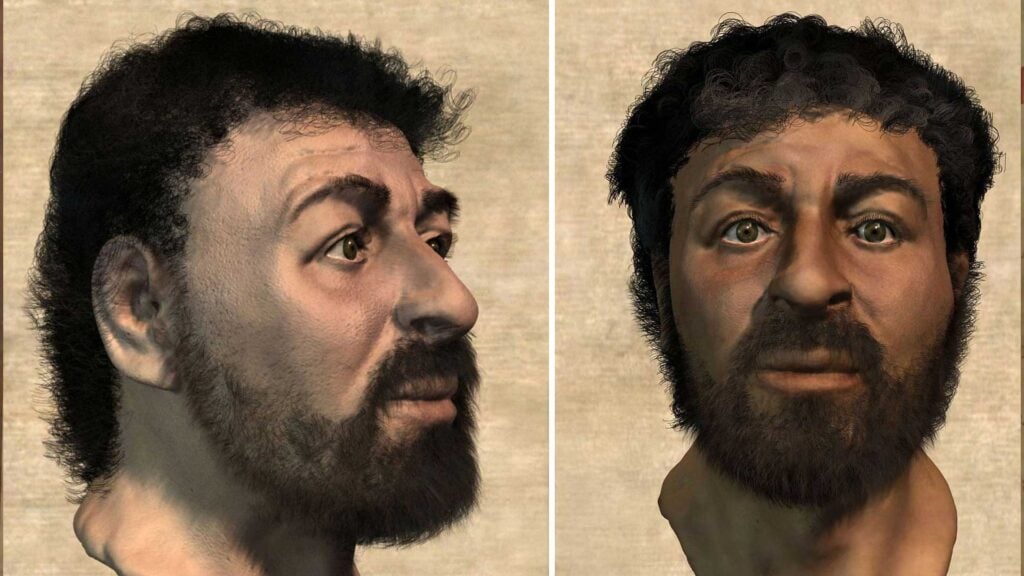
What people sometimes miss is that “Christ” isn’t a surname either. It comes from the Greek Christos, which translates to the Hebrew Mashiach, meaning “the anointed one.” So “Jesus Christ” is really “Yeshua the Messiah” in its original context. Think of it like calling someone Alexander the Great. The second part tells you something about who they are, not what their mother called them at dinner.
How People Were Named in First-Century Judea
In Yeshua’s time, people didn’t use surnames the way we do now. Identity came through family or geography instead, so you’d hear something like “Yeshua of Nazareth” or “Yeshua, son of Joseph.” The naming conventions were entirely relational, which makes the modern habit of writing “Jesus Christ” on everything from church signs to bumper stickers a pretty significant departure from how things worked in first-century Galilee.
What the Name Yeshua Actually Means

The meaning of the name, though, hasn’t gone anywhere. Yeshua means “The Lord Is Salvation” in Hebrew, and that meaning holds whether you’re saying it in Hebrew, Greek, Latin, or English. Language works like that. In German, a bound set of printed pages is a buch. In Spanish, it’s a libro. The object stays the same regardless of what you call it, which is more or less what Shakespeare was getting at in Romeo and Juliet when he wrote, “That which we call a rose / By any other name would smell as sweet.”
What Acts 2 Says About Language and the Name of Jesus
Acts 2 makes a related point. On the Day of Pentecost, around AD 30, the apostles addressed Parthians, Medes, Elamites, Mesopotamians, Egyptians, and a long list of other cultures. The Holy Spirit didn’t require everyone to learn Hebrew first. The message came to people in their own languages, with the emphasis on understanding rather than phonetic precision.
Acts 2:21 and Calling on the Name of the Lord
Acts 2:21 puts it plainly: “call on the name of the Lord” and “you shall be saved.” The focus falls on calling, not on getting the accent right. Which, given how many languages the name has passed through, is probably for the best.